Athens Day Tours
I’m Serious Day Tour Man AI, your day trip expert. Ask me anything — where to go, how to get there, and what’s actually worth your day.
Athens sits inside a ring of the ancient world’s greatest hits: the temple where sailors read Poseidon’s mood an hour down the coast, the sanctuary the Greeks called the navel of the earth two and a half hours north, and a theatre whose acoustics still carry a whisper to the top row after twenty-four centuries.
The city block carries the mechanics that now govern everything: the Acropolis runs on strict timed slots booked through one official portal, and the details — including the fifteen-minute rule that catches latecomers — are below.
Here’s what’s worth a day, with real times and honest trade-offs.

Popular Day Trips

Delphi
The Three-Hour Bus, the Sanctuary on the Slope

Cape Sounion
The Coastal Bus, Poseidon’s Columns
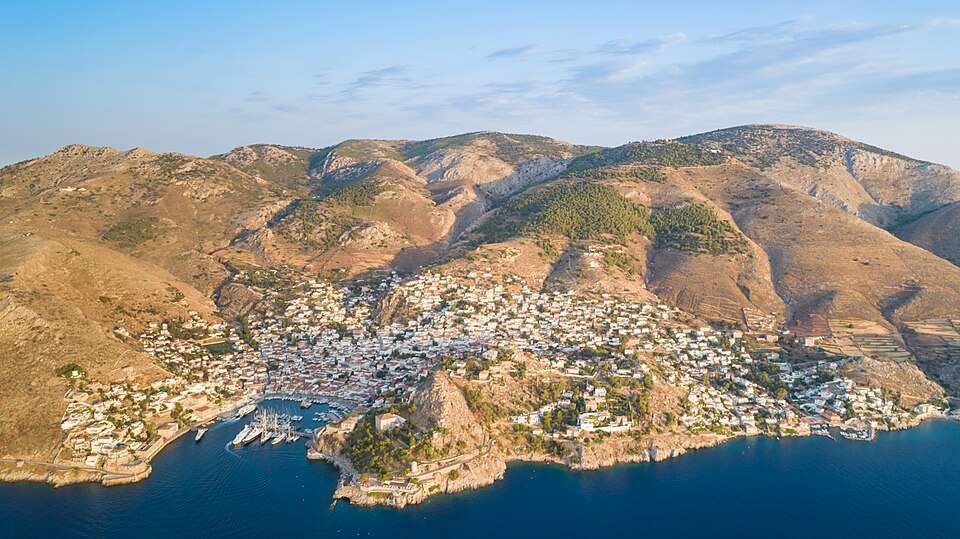
Hydra
The Fast Ferry, the Island With No Cars
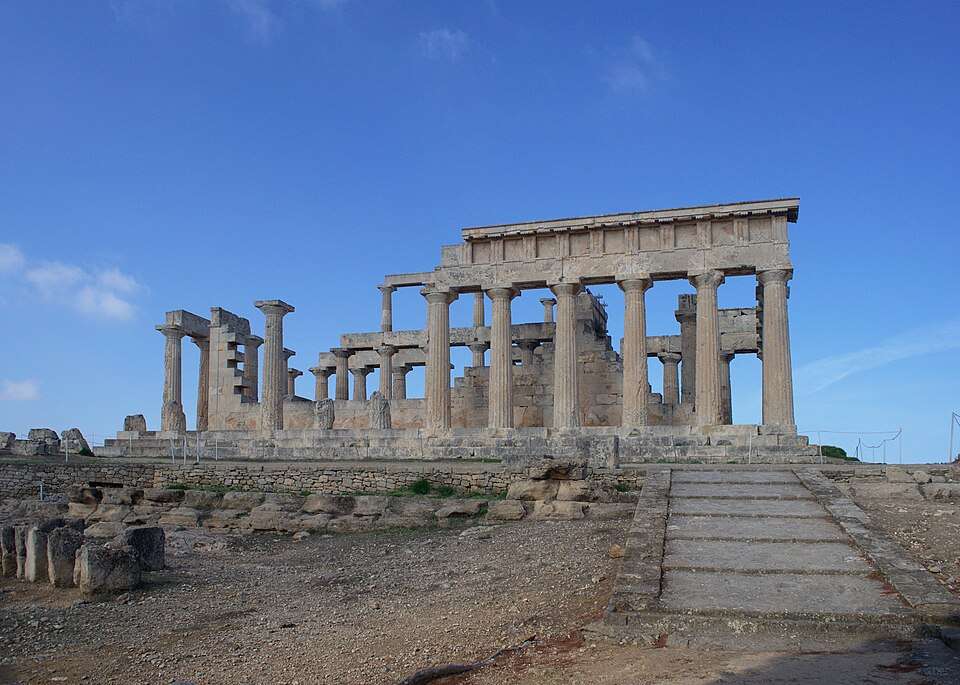
Aegina
The Last-Ferry Rule, a Temple Beautifully Complete

Nafplio & Mycenae
The Argolis Triangle, the Lion Gate
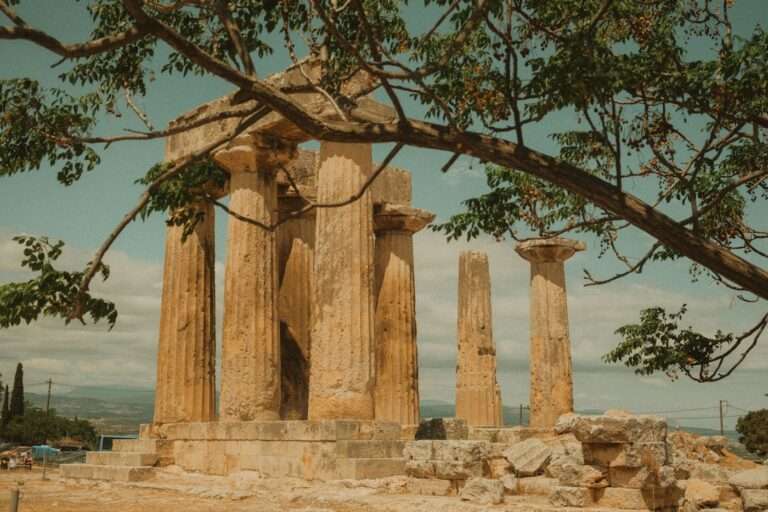
Corinth
The canal, the temple, and the bema where Paul stood
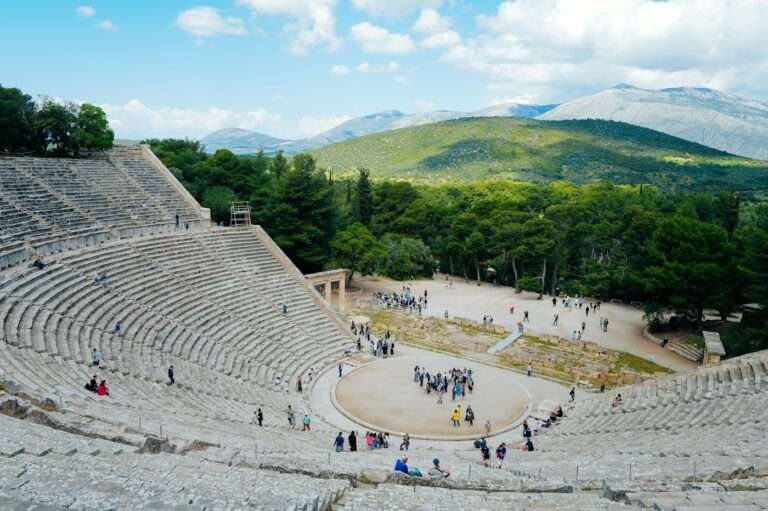
Epidaurus
The theatre where a coin drop reaches the back row
Cape Sounion — Poseidon at the Edge
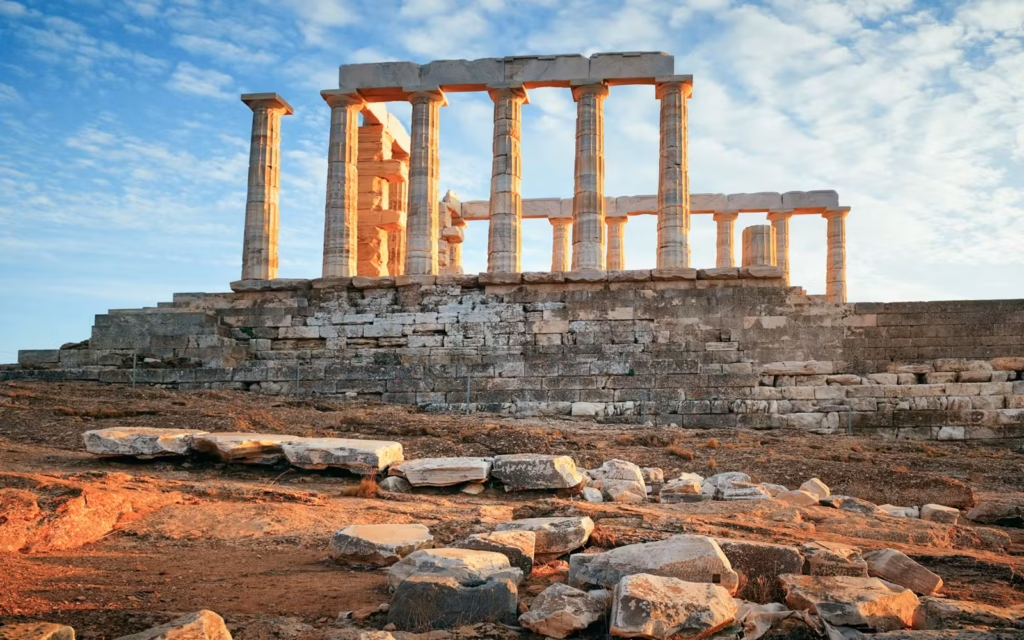
An hour southeast down the Athens Riviera, the Temple of Poseidon stands on Cape Sounion’s cliff edge exactly as a temple to the sea god should: sixteen Doric columns of white marble against open Aegean, visible to ancient sailors rounding for Piraeus and framing sunsets that have been an Athenian institution for generations. Byron carved his name on a column — found, not encouraged.
The format that works: leave mid-afternoon, drive or bus the coastal road past the Riviera’s beaches (Vouliagmeni’s lake — a warm, spring-fed swimming hole under its cliff — is the classic stop), arrive ninety minutes before sunset for the site at golden light, and hold your ground for the drop itself. The site ticket is modest and bookable on the same official portal as everything else; the taverna cluster below the cape handles the fish dinner after.
Sunset is the point and everyone knows it, and summer evenings run crowded, so the contrarian move is early morning, when the temple stands alone over an empty sea. Swimmers pack the suit either way; the coves below the cape are the payoff. Half day, low effort, dense with myth.
Read the full Cape Sounion day-trip page.
Delphi — The Navel of the Earth
Two and a half hours northwest into the Parnassus foothills, Delphi was the ancient world’s information center: the sanctuary where the Pythia delivered Apollo’s oracles and city-states parked their treasuries to stay in the god’s good graces. The setting still explains the reverence — the Sacred Way switchbacks up the mountainside past the Athenian Treasury to the Temple of Apollo’s standing columns, the theatre above it, and the stadium at the top, all hanging over an olive-sea valley running to the gulf.
The museum is the equal half: the Charioteer’s bronze gaze alone justifies the road, with the Sphinx of Naxos and the omphalos stone — the “navel” itself — beside it. Book site and museum on the official portal, climb in the morning cool, and give the pair four hours on the ground.
The drive is the standard format (tours run daily; the public bus works for the independent), Arachova’s stone-built ski-town terraces handle lunch ten minutes away, and winter visits trade crowds for Parnassus snow behind the columns. The math: five hours of road around four on site makes a long, deeply satisfying day — the single best classical excursion from Athens, and the one to keep if keeping only one.
Read the full Delphi day-trip page.
The Argolis — Epidaurus, Mycenae & Nafplio
The Peloponnese triangle packs three registers into one loop, ninety minutes to two hours out via the Corinth Canal’s vertigo-slot bridge (stop; everyone does).
Epidaurus first: the best-preserved theatre of the ancient world, where the acoustics are not a legend but a demonstration — stand center stage, drop a coin or tear paper, and the top of fifty-five rows hears it. Summer’s festival stages ancient drama here under the stars, booked ahead and worth reorganizing a trip for. Mycenae second: Agamemnon’s citadel, half a millennium older than classical Athens — the Lion Gate’s massive lintel, the beehive Treasury of Atreus, and Bronze Age walls the later Greeks assumed giants built.
Nafplio closes the loop as the reward: the first capital of modern Greece, a Venetian-Ottoman old town of bougainvillea balconies under the Palamidi fortress (999 steps by legend, fewer by count, or a short drive), with the Bourtzi islet in the harbor and the Peloponnese’s best gelato-and-promenade evening. It is a full, rich day self-driven or toured, antiquity twice and then wine by the water, and an overnight in Nafplio is the trip most travelers wish they’d booked.
Read the full Nafplio & Mycenae day-trip page.
Hydra & the Saronic Islands — The Car-Free Day
The island day runs from Piraeus by fast ferry, and Hydra is the headliner: ninety minutes to a harbor amphitheater of stone mansions where cars simply don’t exist — donkeys and water taxis are the transport, and the silence registers within minutes of landing. The circuit: the marble-flagged harbor front, the coastal path west past the cannons and the swimming rocks at Spilia (deep water, ladders, no sand and no need), and the lanes climbing to viewpoints where cats supervise everything. Leonard Cohen’s decade on the island supplies the modern-pilgrimage layer; the mansions supply the eighteenth-century one.
The alternatives sort by taste: Aegina, forty minutes out, is the low-effort classic — the Temple of Aphaia (part of the “sacred triangle” with the Parthenon and Sounion), pistachios with protected status sold everywhere, and family beaches; Poros pairs pine woods with a clock-tower town for the gentlest version; and the three-island cruise packages compress all of it into a single scheduled day for those who prefer logistics handled.
Three rules apply: book summer fast-ferry seats ahead, respect the meltemi wind’s schedule changes, and take the early boat — Hydra at 10 a.m. and Hydra at 2 p.m. are different islands. The frame: this is the exhale day, and the correct sequel to two days of marble.
Read the full Hydra day-trip page.
Meteora — The Honest Verdict
The monasteries on their rock pillars — among the most extraordinary sights in Europe — sit four hours from Athens, and the day-trip format exists: a dawn train or coach, four hours up, a compressed circuit of two or three monasteries, four hours back. It runs fourteen-plus hours, most of them in transit, and it delivers the postcard while spending the awe budget on a bus seat.
The verdict: Meteora is an overnight trip. The evening and morning light on the pillars — the whole reason photographers live in Kalambaka — is for those who stay; the day-trip crowds funnel into the same midday window; and the train option with a night in town costs barely more than the coach sprint. Travelers with only one discretionary day from Athens should take Delphi or the Argolis instead and save Meteora for a proper two-day swing.
For those who go regardless: the six active monasteries rotate closing days (check the current schedule when planning), dress rules are enforced (knees and shoulders; wrap skirts provided for women), the Grand Meteoron and Varlaam anchor the circuit, and Agios Stefanos is the accessible one — reached by footbridge rather than steps. However you arrive, the first sight of the pillars from the valley floor resets what you think geology is willing to do.
The Acropolis Rules, the Plaka & Athens Itself
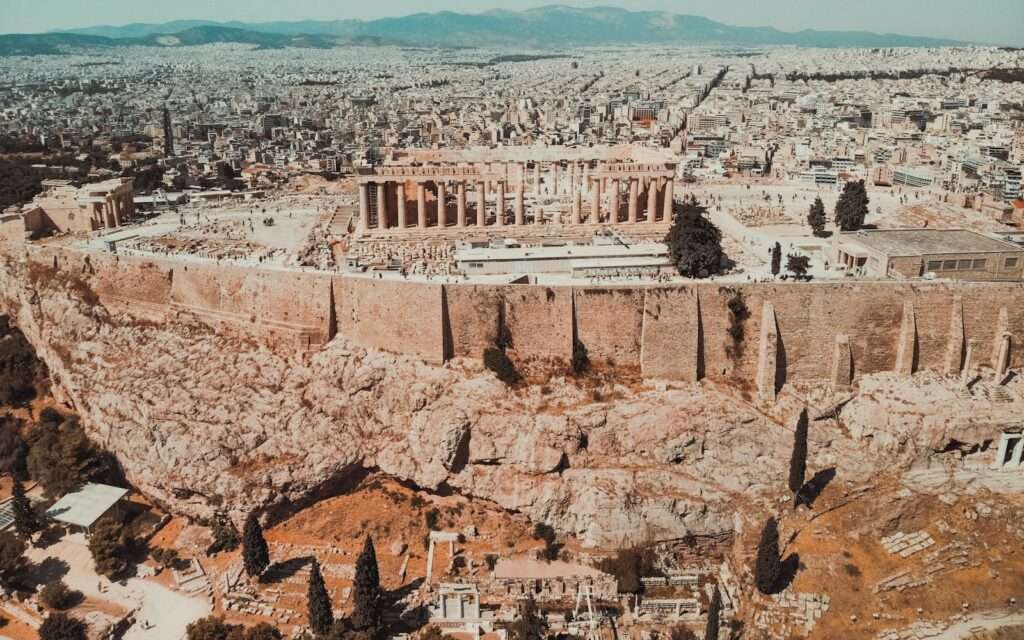
The mechanics that govern the trip, current and strict: Acropolis entry runs on timed slots booked through the official Hellenic Heritage portal — hhticket.gr — with the ticket valid from fifteen minutes before to fifteen minutes after your slot; miss the window and the gate is within its rights. Booking opens sixty days out, summer prime slots (the 8 a.m. opening and the last evening entries) sell out first — book a week ahead minimum, two or three for July–August — and the site closes on a short list of holidays. Prices run seasonal (roughly double in summer), the Acropolis Museum is a separate ticket, and the south-slope entrance by the Akropoli metro beats the main gate’s queues while adding the Theatre of Dionysus first. Free-admission days exist and still require a reserved slot.
The strategy: take the opening slot, walk up in shade, and be off the rock by mid-morning — then spend the heat inside the Acropolis Museum, where the Parthenon frieze gallery aligns with the building visible through the glass, which is the point. The Ancient Agora, Hephaisteion, and Roman Agora fill the afternoon at a fraction of the density.
The living city: Plaka’s lanes taken early or late, Monastiraki’s flea-market Sundays, Anafiotika’s whitewashed Cycladic pocket clinging under the rock, and the evening volta up Philopappou Hill for the Parthenon-at-golden-hour view that costs nothing. Eat the souvlaki wrapped (pita, tzatziki, no fork), the horiatiki without lettuce (there is never lettuce), and one long taverna night in Psyrri or Koukaki; drink the freddo espresso like the local infrastructure it is. Season math: April–June and September–October are the windows; July–August runs brutally hot — the slot system plus the museum-at-midday strategy is heat management as much as crowd management; and winter delivers the sites at their emptiest under the year’s clearest light.
Full day-trip pages: Aegina.
Frequently Asked Questions
How do Acropolis tickets work now?
Timed slots only, booked at the official hhticket.gr portal — valid from 15 minutes before to 15 minutes after your slot, with booking open 60 days ahead. Summer’s 8 a.m. and evening slots sell out first; the museum is a separate ticket; free days still need a reserved slot.
Is Delphi or Meteora the better trip from Athens?
Delphi — two and a half hours to the sanctuary, theatre, stadium, and the Charioteer, back by dinner. Meteora is four hours each way and needs an overnight; as a day trip it’s mostly bus.
When should you visit Cape Sounion?
Ninety minutes before sunset for the classic, with a Vouliagmeni swim en route — or early morning for the temple alone over an empty sea. Byron’s carved name is on a column; leave yours in a notebook.
What’s special about the Epidaurus theatre?
The acoustics are a live demonstration: a coin dropped center stage reaches the fifty-fifth row. Pair it with Mycenae’s Lion Gate and Nafplio’s harbor evening for the Peloponnese triangle, and book the summer festival if the dates align.
Which Saronic island should you pick?
Hydra for the car-free stone-mansion classic (early boat, swim at Spilia’s rocks); Aegina for temples and pistachios at half the distance; Poros for pine-shaded ease. Book summer fast ferries ahead and let the meltemi have the last word.