Sunset at Cape Sounion
Poseidon’s temple stands on the cliff where Attica runs out of land, and the entire trip is engineered around one hour: sunset through the columns. The coastal bus does the rest.
The short version
- KTEL’s coastal buses run from central Athens along the Apollo Coast to Sounion in about two hours — beach suburbs, marinas, and open Aegean the whole second half; the coastal-route departure points and times are the day’s one homework item.
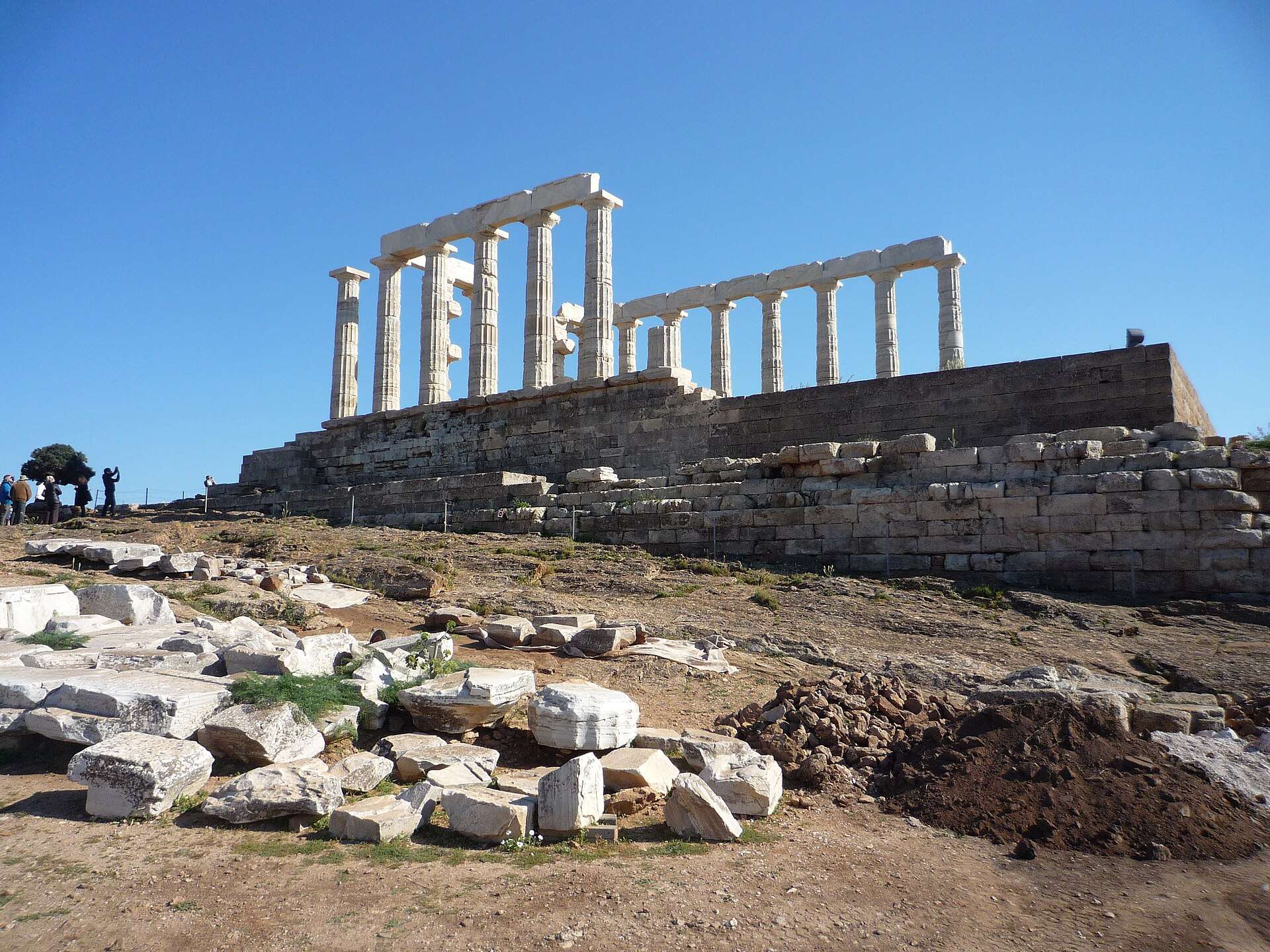
- The Temple of Poseidon — 34 of its Doric columns standing since 444 BC — crowns the cape 60 meters above the sea, built as the sailors’ first and last sight of home.
- Entry runs about €10, and the site’s hours track the sun — open until sunset year-round, which is the schedule the alarm builds on.
- Byron carved his name on a column during his Grand Tour — findable, famous, and the official argument for why you won’t be adding yours.
- The cape’s mythology carries the Aegean’s name itself: King Aegeus watched from here for Theseus’s sails and leapt at the black ones — the sea below is his memorial.
- The west-facing cliff makes this Greece’s most reliable great sunset: the columns silhouette against the water with island profiles scattered behind.

Getting there
The KTEL coastal service is the independent route: roughly hourly departures from central Athens, two hours tracing the Apollo Coast’s beach towns before the temple appears on its headland. Photograph the return timetable at the Sounion stop on arrival — the post-sunset departure is the one that matters and it does not linger. Tours run the same arc with hotel pickups and guaranteed returns at tour prices; drivers make it 90 minutes on the coast road. All three arrive at the same cliff for the same hour of light.
The visit
Arrive with the 90-minute margin and walk up to the temple while the light is still high enough to read the marble: the columns’ entasis, the sanctuary’s footprint, Byron’s graffito hunted along the square pillars. Then claim ground on the west side — the low wall areas fill first — and let the main event run: the sun dropping toward the Peloponnese’s silhouette, the columns going from white to honey to black cutout, the crowd’s phones rising in unison and, briefly, an actual hush. The site clears at sunset proper; the bus stop below collects the congregation. Bring a layer — the cape’s wind arrives with the evening.
When to go
The temple sunsets year-round; the calendar only tunes it. Spring and autumn give warm evenings, clear horizons, and workable crowds. Summer stretches the day — late sunsets, tour-coach peak, and the full amphitheater experience on the cliff. Winter compresses the schedule and thins the audience to enthusiasts under sharper, colder light — check the earlier closing against the earlier sunset; they still align. Full-moon evenings occasionally add after-hours openings announced by the culture ministry, the connoisseur’s version when the calendar cooperates.
Frequently Asked Questions
Is it worth four hours of bus for one sunset?
The coastal ride is scenery, not transit, and the temple at golden hour is among the Mediterranean’s defining images — the trade works for anyone who plans the timing. Arriving at noon in July, less so.
Can I swim on this trip?
Beaches flank the cape below the temple, and summer visitors fold in a swim before the ascent — suits under clothes is the local method. Legrena and the coves en route serve the dedicated.
Where exactly is Byron’s name?
On a square pillar of the temple’s east side, among centuries of Grand Tour graffiti — ask a guard or follow the pointing. The carving-things-yourself era is closed, emphatically.
Tour or bus?
Bus for cost and independence with the timetable discipline; tour for guaranteed return logistics and commentary. Sunset tours from Athens exist precisely because the return-bus question worries people — the bus answers it fine with the alarm’s photograph rule.
What’s actually at the site besides the temple?
Sanctuary foundations, a small fortification line, and the cliff itself — plus a café at the car park. This is a one-monument pilgrimage with a two-hour approach; the monument carries it.