Epidaurus from Athens
Fourteen thousand seats, twenty-four centuries, and acoustics no one has fully explained — two hours from Athens in the healing god’s sanctuary.
The short version
- Epidaurus sits about 130 km from Athens: two hours by car or organized tour. Public buses exist but run thin — a couple of weekday KTEL departures — so check times both ways before betting the day on them: ktelargolida.gr. Most travelers pair it with Nafplio and Mycenae on a tour loop.
- The site ticket costs €20 (€10 reduced; free for EU under-25s), covering the theatre, the Asklepieion sanctuary, and the museum. Summer hours run to evening; winter closes at 17:00.
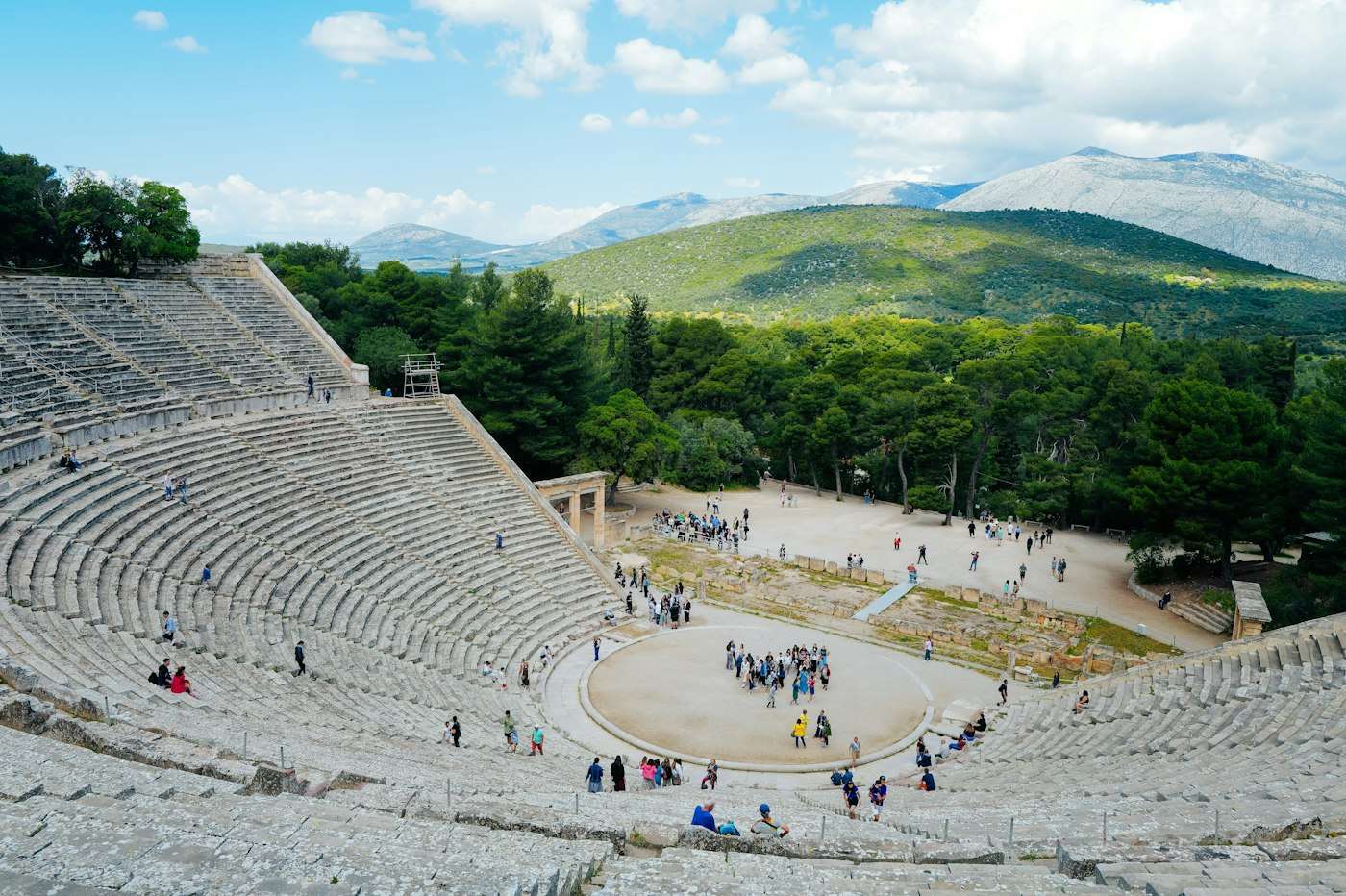
- The theatre is the best-preserved in the Greek world: 55 rows, around 14,000 seats, built into the hillside around 340 BC — and the acoustics are the legend that happens to be true. Stand at the center of the orchestra, drop a coin, and the top row hears it.
- The theatre served the Asklepieion — the ancient world’s most famous healing sanctuary, where treatment mixed medicine, dreams, and drama. The quieter ruins and the museum tell that story.
- From late June through August, the Athens–Epidaurus Festival stages Greek drama in the theatre itself at 21:00 — the original plays in the original space. Tickets at aefestival.gr; they go fast when the program drops.

Getting there
By car, take the A8 toward Corinth and follow the Epidaurus signs south — about two hours from central Athens, with free parking at the site and the Corinth Canal as a natural stop. Organized day tours run the classic Argolid loop — Corinth, Mycenae, Nafplio, Epidaurus — and solve every logistics problem at once. KTEL buses from Kifissos terminal serve Epidaurus a couple of times on weekdays; they work for the determined, but the return timetable rules the day. During festival season, special evening buses run for performances — check the festival site when booking.
The day
Walk up through the pines and take a seat halfway up before you do anything else — the theatre arrives whole, its 55 limestone rows folded into the hillside so naturally that the landscape seems to have grown seating. Then test the legend from the orchestra’s center stone: a coin drop, a page tear, a struck match, all audible at the top, 60 rows and 22 meters up. Polykleitos the Younger built it around 340 BC and nobody has improved on it since. Give the theatre an unhurried hour, then walk the sanctuary: Asklepios’s temple foundations, the mysterious round tholos, the long abaton hall where patients slept awaiting healing dreams — antiquity’s great hospital, with drama prescribed as therapy. The museum gathers the surgical instruments and inscriptions recording cures. If your visit is a festival night instead, everything reverses: arrive at dusk, watch Sophocles under the actual stars, and understand why 14,000 people once traveled here to feel better.
When to go
April through June and September through October for the site itself — shadeless Greek summer afternoons are for theatres with roofs. July and August are festival months: performance nights transform the visit and the logistics both, and booking early is the whole game. Winter works with a car and a jacket; the theatre empty in low light is its own reward, and the hours shrink accordingly.
Frequently Asked Questions
How do you get to Epidaurus without a car?
Honestly: with planning. KTEL runs a couple of weekday buses from Athens’ Kifissos terminal, and local connections run via Nafplio — but timetables are thin, so most car-free visitors take an organized Argolid tour or build the trip around a Nafplio stay. Festival nights add special performance buses.
What does Epidaurus cost?
€20 for the full site ticket, €10 reduced, free for EU visitors under 25 — covering theatre, sanctuary, and museum. Festival performance tickets are separate and sold through the Athens–Epidaurus Festival.
Are the acoustics really that good?
Yes — and tested daily by visitors dropping coins and tearing paper at the center stone while friends listen from the top row. The limestone rows filter background noise and carry high frequencies upward; researchers still argue over how much was design and how much luck.
What else is at the site besides the theatre?
The Asklepieion — the ancient world’s most renowned healing sanctuary: temple foundations, the enigmatic tholos, the dormitory where the sick sought healing dreams, and a museum of cures and instruments. The theatre was, in effect, the hospital’s entertainment wing.
Can you see a play there?
From late June to August, the Athens–Epidaurus Festival stages ancient drama (surtitled in English) in the theatre at 21:00, mostly on weekends. It is among the great theatrical experiences on earth; book the moment the program is announced.