A Day on Hydra
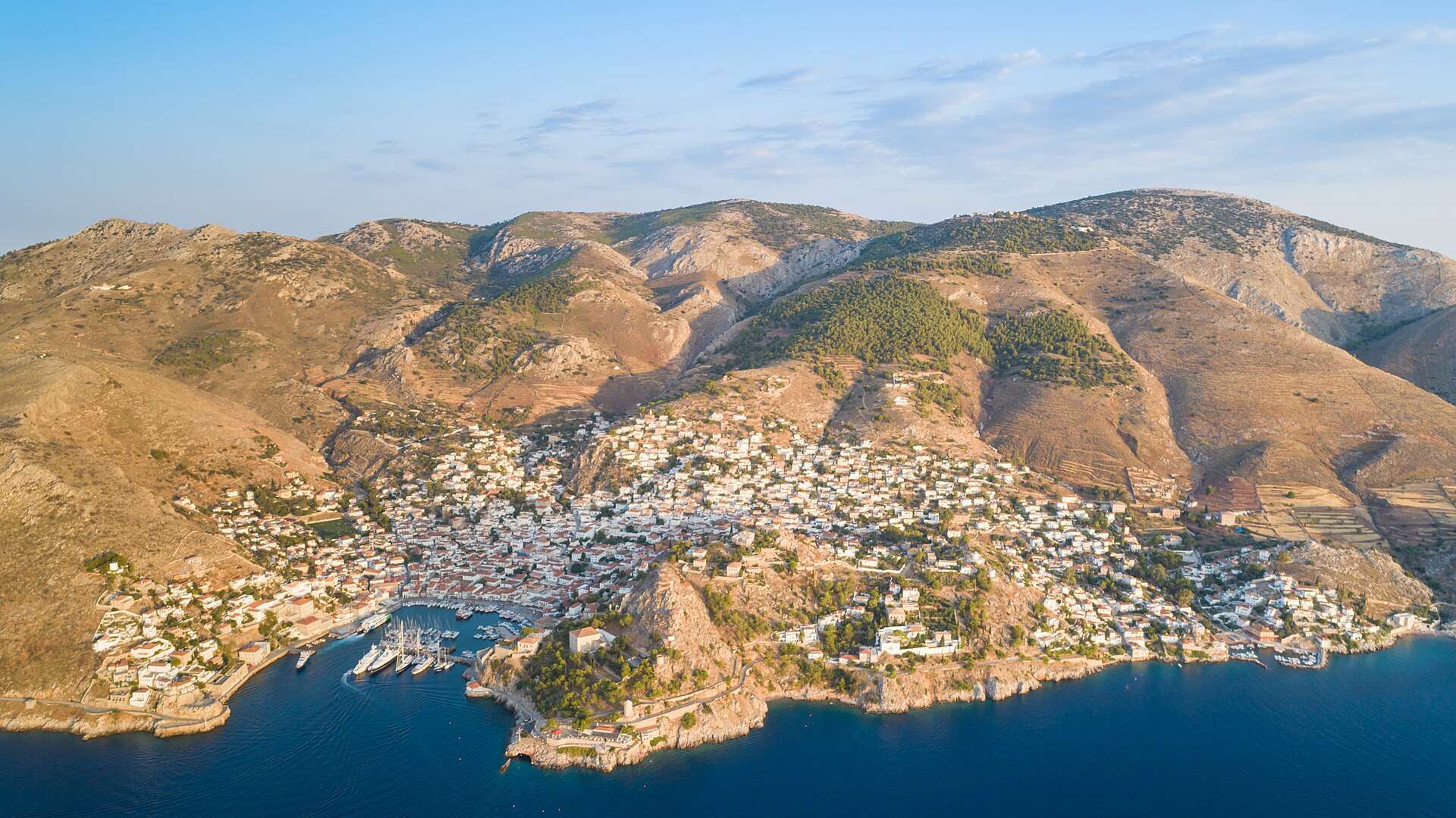
Two hours from Piraeus, an amphitheater of stone mansions rises from a harbor where no car has ever driven. Mules do the hauling, rocks do the swimming, and the last ferry back rules the day.
The short version
- Fast ferries and hydrofoils run Piraeus to Hydra several times daily in about 1.5–2 hours, with fares around €30 each way — summer weekends sell out, per the alarm’s booking rule; operator schedules at hellenicseaways.gr.
- Hydra bans wheeled vehicles by long-standing rule — no cars, no scooters — and the mule trains at the harbor are the island’s actual freight system, not a photo service (though they tolerate the photography professionally).
- The harbor amphitheater — sea captains’ mansions stacked in grey stone — made the island’s fortune in the sailing age and its fame in the film-and-artist age; the cannon-lined harbor arms frame it for the arriving boat.
- Swimming happens off rock platforms rather than beaches: Spilia’s ladders drop straight into deep blue steps from the harbor mouth, and the coastal path west serves further platforms all the way to Vlychos’ small pebble strand.
- That coast path — flat, paved-to-dirt, sea-hung — reaches Kamini’s fishing harbor in twenty minutes and Vlychos in forty; donkeys and water taxis handle the return for the sun-spent.
- Leonard Cohen bought a house here in 1960 and wrote in its rooms for decades — the island keeps the association with quiet pride and no museum, which suits both parties.

Getting there
Piraeus’ morning fast boats put you in the harbor before ten; the alarm’s two rules — book summer weekends ahead, and fix the last return in your head on arrival — are the day’s entire administration. The harbor front receives you into the island’s whole transport network, which is your feet plus optional mules and water taxis. Day bags beat luggage; whatever you bring, you or a mule carries up whatever stairs your plans involve.
The day
Let the harbor’s first hour be aimless — the marble quays, the cats auditing the fish boats, the mansion lanes climbing behind. Then the coast path west: Spilia’s ladders for the first swim while the light is high, Kamini’s harbor for a coffee among moored caiques, and Vlychos for the pebble-beach-and-taverna version of noon. The cruise and day-boat crowds peak through the middle hours — the alarm’s taverna-table strategy is not a joke but a schedule: long fish lunch, local retsina or not, and the lanes reclaim themselves by four. The afternoon climbs a little — the Koundouriotis mansion museum for the sea-captain era, or just upward until the harbor composes itself below — before the golden-hour swim and the ferry that you already know the time of. Sunset from the westward cannons sees the boats out; yours included, regrettably.
When to go
May–June and September–October are the island’s own months — swimmable water, walkable light, rooms and ferries unstrained. July–August runs at full Aegean volume: book everything, swim early and late, and adopt the siesta as infrastructure. Winter Hydra is a stone town of residents, cats, and shuttered awnings — beautiful, functioning, and served by fewer boats; the day trip works on calm days for connoisseurs of quiet. Easter, if your dates land there, is the island at its ceremonial peak — and its most booked.
Frequently Asked Questions
Are there really no vehicles at all?
A garbage truck and emergency exceptions exist; otherwise the ban holds absolutely and has for decades — it’s the island’s founding ordinance of atmosphere. Everything you see arrived by boat and mule, including the building materials.
Is the swimming good without beaches?
Better — the rock platforms drop into deep, clear water without the shuffle-in gradient, and ladders do the entries. Spilia and Hydronetta are the classics; water shoes help the tender-footed. Vlychos supplies the pebble option for beach traditionalists.
How crowded does it get?
Midday in high summer, the harbor front runs full with day boats and cruise tenders; the paths and platforms absorb the spill quickly, and by late afternoon the island exhales. The alarm’s rhythm — edges of the day active, middle at a table — is the local method.
What’s the Leonard Cohen connection?
He bought a house above the port in 1960 for $1,500 of inheritance, wrote here across decades, and the island threads through the songs. The house stays private; fans walk the lanes, sit where the light does, and understand without a plaque.
Hydra or Aegina for the Athens island day?
Aegina runs closer, cheaper, and pistachio-flavored with a major temple; Hydra costs more ferry time and repays it in car-free atmosphere no other island matches at this distance. First-time day: Hydra. Temple-collectors: Aegina. The Saronic ferries make both honest options.