Corinth from Athens
An hourly train, a six-kilometer cut through solid rock, and seven standing columns older than the Parthenon.
The short version
- Proastiakos suburban trains leave Athens roughly hourly and reach Corinth in about an hour and five minutes, around €9 each way — times at hellenictrain.gr. The ancient site is a short taxi ride from the modern station.
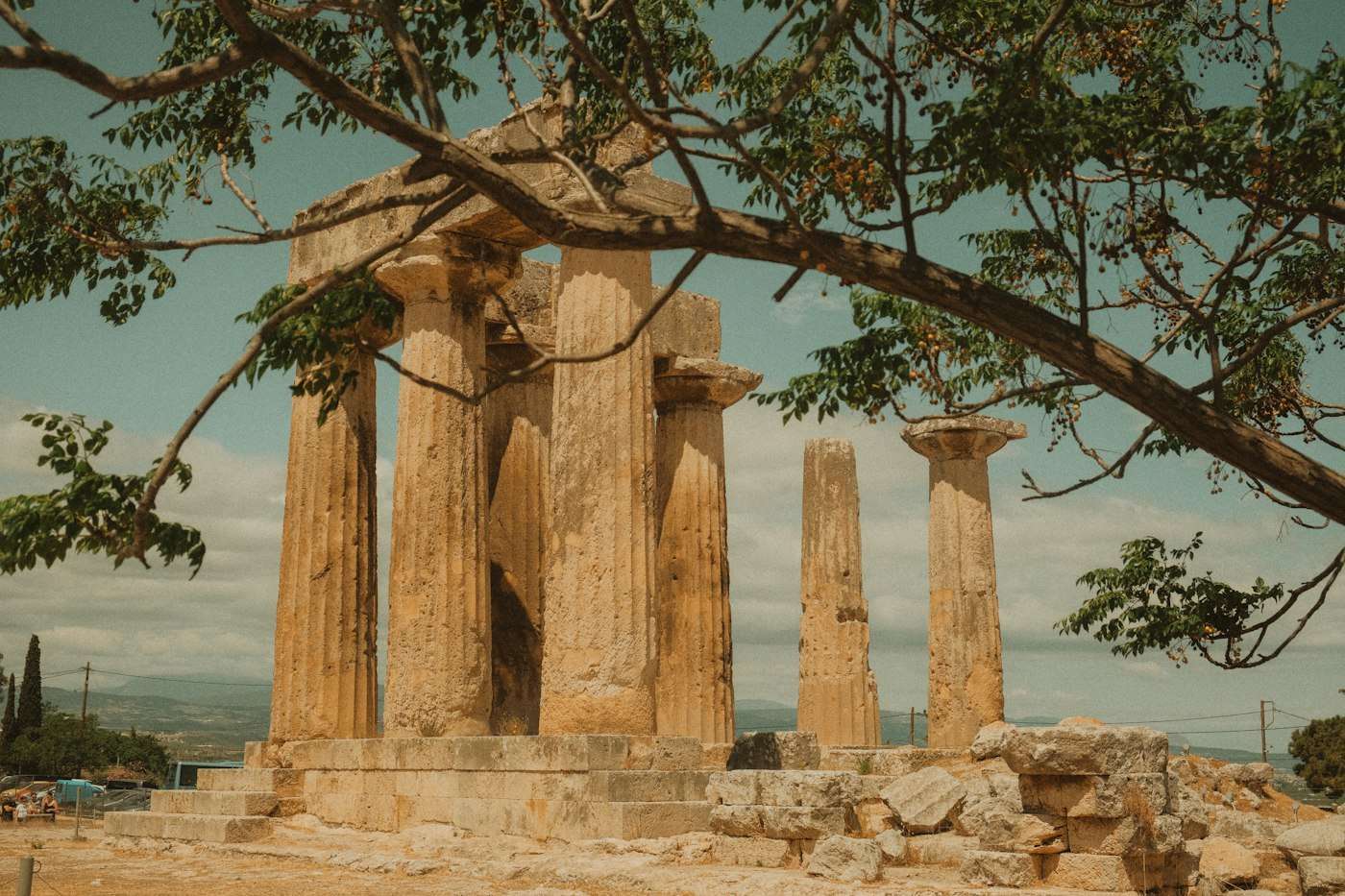
- Ancient Corinth costs €8 with the museum included, €4 reduced; summer hours run to evening, winter closes mid-afternoon. The Temple of Apollo’s seven monolithic columns have stood since about 540 BC.
- The bema — the stone platform where St Paul was brought before the proconsul Gallio — anchors the forum. Paul lived and preached here for a year and a half, and wrote letters back to this congregation that half the world still reads.
- Acrocorinth, the mountain fortress above the site, is free to enter: ancient foundations under Byzantine, Frankish, Venetian, and Ottoman walls, and a view over two seas. A taxi to the gate saves a brutal climb.
- The canal is the appetizer: an 1893 cut, 6.3 km long and barely wider than a ship, sliced vertically through the rock of the isthmus. The pedestrian bridge at the top looks straight down the corridor.

Getting there
Proastiakos suburban trains run roughly hourly from Athens to Corinth — about an hour and five minutes, around €9 each way. The modern station sits outside the modern city, itself several kilometers from the ancient site; taxis wait at the station and the ride to Ancient Corinth village takes about ten minutes. Arrange the return pickup or take the driver’s card. By car, the A8 motorway does it in an hour, with the canal bridge a natural stop at the isthmus on the way.
The day
Stop at the canal first if you drive, or save it for the return taxi if you came by train: the walls of the cut drop sheer for dozens of meters, and a bulk carrier threading it under tug power is worth waiting for. At Ancient Corinth, the Temple of Apollo carries the skyline — squat, archaic, its columns cut whole from single stones a century before the Parthenon went up. Walk the forum to the bema, the Lechaion Road’s paving, and the Peirene fountain, which has watered this spot continuously since the sixth century BC. The site museum is compact and strong on the Roman city — the Corinth Paul knew was a Roman boomtown, rebuilt by Julius Caesar after Rome had razed the Greek original. Acrocorinth looms 575 meters overhead: gates within gates, a summit chapel, and the ruined temple of Aphrodite whose thousand sacred courtesans gave ancient Corinth its reputation. The fortress is free and vast; give it ninety minutes and good shoes.
When to go
March through May and September through November — the site is shadeless and July bakes it. Winter works for the ruins but shortens the hours to mid-afternoon, which makes the timing tight with the hourly trains. Spring covers the forum in poppies and gets the light right for the canal. Sunday morning trains carry day-tripping Athenians; weekdays the site can be startlingly quiet.
Frequently Asked Questions
Can you do Corinth from Athens by public transport?
Yes. Hourly Proastiakos trains take about an hour and five minutes, then a ten-minute taxi covers the last stretch to the ancient site. Agree the return pickup with your driver — taxis do not cruise the village.
What does Ancient Corinth cost?
€8 including the archaeological museum, €4 reduced. Acrocorinth, the fortress above, is free. Hours shrink in winter — check before an off-season trip.
What is the biblical connection?
Paul lived in Corinth for about eighteen months around AD 50–52, was brought before the proconsul Gallio at the bema in the forum, and later wrote the two letters to the Corinthians. The bema still stands, and the Gallio episode helps date Paul’s whole chronology.
Is the Corinth Canal worth a stop?
A short one, yes. The 1893 cut is 6.3 km long, sheer-sided, and startling from the pedestrian bridge. Fifteen or twenty minutes covers it — ships passing are a matter of luck and patience.
How hard is Acrocorinth?
Free but physical: a steep approach, uneven medieval paving, and a big, shadeless circuit. A taxi to the gate removes the worst climb. In summer heat, go early or admire it from below with a clear conscience.