The Ferry to Aegina
Forty minutes to an hour from Piraeus, the nearest real island runs a 2,500-year-old temple beautifully complete, a pilgrimage church at full scale, and a pistachio crop the town prices with confidence.
The short version
- Boats run Piraeus to Aegina constantly in season — hydrofoils in about forty minutes, conventional ferries in a little over an hour at gentler fares — with hellenicseaways.gr among the operators and the alarm’s photograph-the-return rule as the day’s first act.
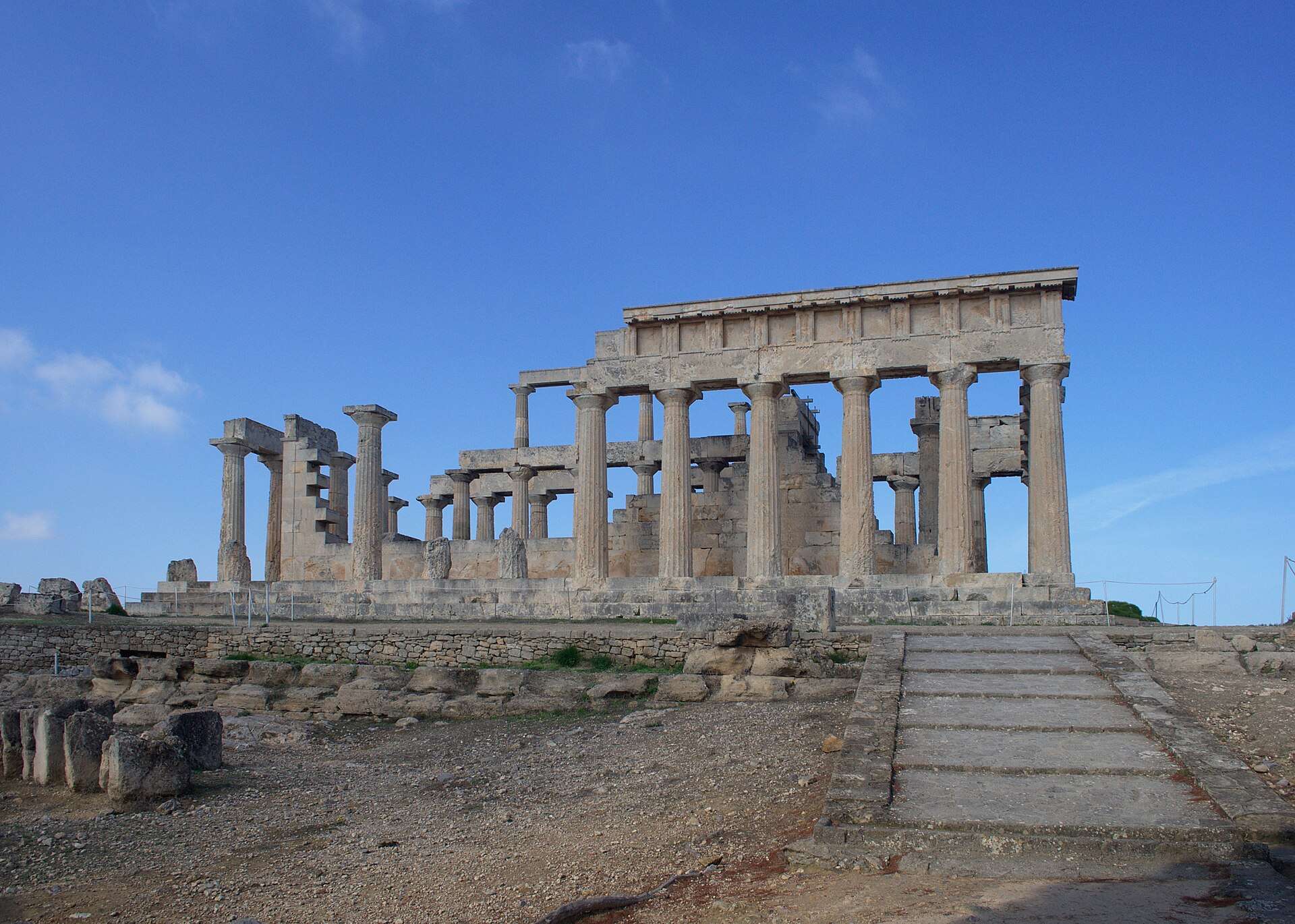
- The Temple of Aphaia crowns a pine hill across the island: Doric, around 500 BC, and among the best-preserved temples in Greece — a substantial colonnade standing on both levels, a small site fee, and a Saronic view that explains the placement.
- The triangle truth per the alarm: the neat sacred-triangle story linking Aphaia, the Parthenon, and Sounion’s Poseidon temple is a modern observation dressed as ancient intent — the temple predates the Parthenon, the geometry is real on a map, and the site’s own signage keeps the claim in its lane, as does this page.
- Agios Nektarios — one of Greece’s largest churches, built at the monastery holding the modern saint’s shrine — draws pilgrimage at national scale on the road to the temple; modest dress applies, and the twinned visit (church and temple share the bus route) is the island’s standing pairing.
- The pistachio is the alarm’s souvenir with paperwork: Aegina’s crop holds protected-designation status, and the harbour-front shops sell it roasted and in the shell at prices the island defends without apology, and the fistiki finds its way into everything from brittle to gelato.
- The supporting island: the harbour town’s neoclassical front and fish market lanes, the Kolona site’s lone column over the beach north of the port, Perdika’s fishing-village lunch tables at the island’s southern tip, and horse-drawn carriages working the front at negotiated rates.

Getting there
Piraeus boards from the Saronic gates a short walk from the metro’s harbour end — hydrofoil versus ferry is the speed-versus-price choice, both frequent enough that the alarm’s returning-boat photograph matters more than the outbound pick. On the island, the temple-and-church bus runs from the harbour on a posted schedule (taxis fill its gaps), and everything else in town walks. Summer weekends load the boats with Athenian day-trippers both directions — the early boat out and the not-last boat home is the veteran pattern.
The day
Temple first while the light is high and the buses fresh: Aphaia’s colonnade takes an unhurried hour — walk the platform’s full circuit, find the surviving color traces the signage points to, and let the pine-and-sea setting do what it was chosen for. Agios Nektarios slots on the same road: the great church’s scale, the shrine’s steady pilgrimage rhythm, and the dress code honored per the standing rule. Back in town, lunch runs the fish-market lanes’ tavernas or the harbour front by budget; the pistachio errand per the alarm concludes at a single-purpose shop with the roasted-in-shell benchmark. The afternoon chooses: Kolona’s column and its swimming beach, the carriage lap of the front, or the bus to Perdika for the fishing-harbour version of the island at its southern end. The photographed return boat closes the day with margin to spare — the last-ferry rule exists because the exceptions were memorable.
When to go
April through June and September through October run the island at its best — temple weather, open tavernas, thinner boats. July and August work at full Greek-summer throttle: earliest boats, midday shade discipline, and swimming as the afternoon’s answer. The pistachio harvest lands in late summer with the Fistiki Fest (September, most years) as the crop’s own festival. Winter thins the schedule to locals’ rhythms — the temple stays open on reduced hours, and a clear off-season day makes the emptiest, finest version of the visit.
Frequently Asked Questions
Is the temple hard to reach without a car?
No — the public bus from the harbour serves Agios Nektarios and the temple on a posted schedule, taxis quote flat rates for the loop, and tour combos exist for the effort-averse. The temple sits a short uphill walk from its stop. The bus timetable joins the ferry schedule in your camera roll, per the island’s whole logistics.
What’s the real story on the triangle?
Map the three temples and the near-isosceles triangle appears — a genuine geometric curiosity noted in modern times and upgraded by guidebooks into ancient intention. No ancient source supports the design claim; the temples’ dates and dedications each have their own logic. The alarm’s framing is the honest one: modern story, ancient stones, both enjoyable.
Who was Saint Nektarios?
A 19th–20th century bishop and ascetic, canonized in 1961 and among modern Greece’s most beloved saints — his monastery on Aegina holds his shrine, and the vast church beside it was built for the pilgrimage that never slowed. Visitors of any background are welcome within the dress and conduct norms the site posts.
Are the pistachios really that different?
The island’s variety, climate, and drying tradition produce a denser, more aromatic nut with protected-designation status and prices to match — the alarm’s priced-with-confidence clause is the fair framing. The roasted-in-shell benchmark from a specialist shop settles the question; the brittle and gelato applications make the argument twice.
Aegina or Hydra from Athens?
Hydra (documented on this network) for car-free stone-and-mule theater at greater distance and cost; Aegina for the nearest real island with a major ancient site attached. Temple people choose Aegina without hesitation; aesthetes lean Hydra. The Saronic week does both and argues about the ranking at dinner.